
Ajit Mishra, vice president, Research, Religare Broking, answers your queries.

The NSE 50-share Nifty spurted 97.25 points, or 0.92 per cent, to 10,715.50
Gains were led by Tata Motors amid robust sales in June along with select financials.

On Reva, Mahindra says electric cars are an innovation that can disrupt the automobile sector.

Those that are developing quadricycles from scratch say it will take them at least two years to roll them out.
The benchmark BSE Sensex reclaimed the 28,000 mark, spurting by 409 points or 1.4% at 28,114 and Nifty settled above the 8,500 mark at 8,532, gains of 111 points.

BSE Bankex, Healthcare, Capital Goods and Consumer Durables ended higher.
Positive cues from Asian peers also uplifted the sentiment.

The Nifty50 slipped 33 points to close the session at 8,509 after hitting an intra-day high of 8,587.
The Indian rupee also trimmed most of its early gains and was trading at Rs 61.28 compared to its Wednesday's close of Rs 61.31 to the US dollar.

Markets snapped two-day losing streak and ended flat with a positive bias on Tuesday as gains in auto shares helped offset losses in IT majors.

ICICI Bank was the top gainer after stable rating for its senior unsecured bonds by S&P Global Ratings.

The Sensex ended up 380 points at 27,888 and the Nifty advanced 111 points to end five points shy of 8,400.
.jpg)
The 30-share Sensex ended 117 points higher at 26,560 and the 50-share Nifty gained 31 points to end at 7,936.

Thinning valuation gap between these and mid-caps indicates a shift in investors' preferences.

Banks stocks continued to trade weak along with FMCG major ITC.

The rise in India Inc's market value was led by asset-light firms.
Investors booked profits at higher levels despite the growth oriented Budget.

The broader markets are trading inline with the larger peers with BSE Midcap and Smallcap indices up 1.5% each.

Among the index heavyweights, Reliance Industries ended down 1.9% while mortage lender HDFC eased 0.2%. FMCG major ITC ended down 1.3%.

According to the Society of Indian Automobile Manufacturers, significant growth is being witnessed in the multi-axle trucks segment, which has posted 112 per cent growth in the year 2006-07.

The market breadth ended weak on the BSE with 2,086 shares declining and 893 shares advancing.

The analysis is based on the free-float market capitalisation.

If it splits now, who takes what away and leaves what behind? asks Shekhar Gupta.

Since existing laws do not cover Covid-19, any compensation in this regard has to be left to the discretion of companies.

The major reason for the policy confusion over e-vehicles is the lack of conviction within government about the utility of this disruptive technology and its role in India's larger Paris Agreement climate change commitments.

Sharp fall in capital goods production and manufacturing activity also dented sentiments.
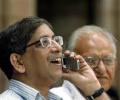
On the last day of FY!5, the Sensex ended lower by 18.37 points at 27,957.49.

You get a 45-day repayment window and reward points. But inability to pay back on time can be a problem.
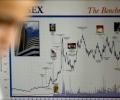
The Sensex ended in red on domestic concerns.
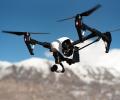
There's a need to train 40,000 pilots over the next year-and-a-half.

We have our own problems for sure and they are not trivial, but for now, our economy is in not too bad a shape, our politics is as personality-driven and authoritarian as that of most countries in the world. We must make the best of what we have and not be excessively unhappy looking at the grass on the other side of the septic tank which may not be greener after all!, observes Shreekant Sambrani.
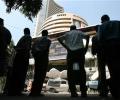
The 30-share Sensex ended up 12 points at 28,517 while the 50-share Nifty ended nearly unchanged at 8,660.
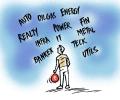
Gaurav Garg, Head of Research, CapitalVia answers readers' stock market queries.

BSE Bankex and Telecom indices led the fall.

The Sensex ended 290 points higher at 29,095 mark and the Nifty gained 94 points to close at 8,806 levels.

Sun Pharma emerged as the star performer and closed 4.03 per cent up at Rs 675.45, while Cipla rallied 1.58 per cent to Rs 592.60.
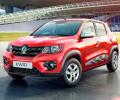
After a spectacular show in 2016, Kwid's sales have contracted by 20 per cent during the April-December period of FY18 to 65,572 units.

The 30-share Sensex ended 50 points lower at 28,112 and the 50-share Nifty declined 12 points to close at 8,531.
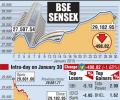
Nifty snaps 10-day winning streak
